William Gibson has said many times in interviews that he knew very little about computers when he wrote his groundbreaking, genre-spawning novel Neuromancer. And yet somehow, all the way back in 1984 he managed to not only anticipate things like Internet culture and wetware, but to understand them better than many of us do even today.
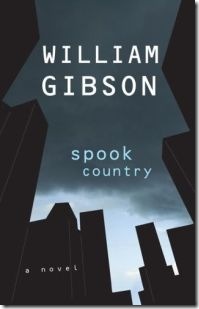 Despite the fact that he’s now a best-selling — nay, legendary — author, I doubt that William Gibson knows much more about international crime and high-tech freelance spies than you or I do. And yet somehow, in his latest novel Spook Country, he manages to not only understand this world, but to extrapolate it and scope out its implications better than anyone else.
Look at how effortlessly he explores a new medium called “locative art.” Locative art is what happens when you mash up GPS units and virtual reality. Think Second Life, if the whole thing was overlaid on top of the real world and accessible through 3D goggles.
The concept of locative art is cool enough. But Gibson’s genius isn’t that he can think up this cool new technology; it’s that he already knows how we’re going to use it. In the first chapter of Spook Country, a locative artist demonstrates the technology by showing a holograph of River Phoenix’s corpse lying face down on the sidewalk — in the exact place where River Phoenix’s corpse actually lay face down on the sidewalk.
Now that’s cool.
(At the risk of self-pimping, let me mention that this locative art technology has a lot of similarities to the multi network I mention in my own novels. Except in my books, the “multi projections” you see in the real world are the result of an imaginary nanotechnological system called the OCHRE network. In Gibson’s book, this is real. Indeed, he supposedly consulted with high-tech wizard Cory Doctorow on the details. You could head out to Radio Shack and build a Spook Country-style work of locative art with a laptop today. I wouldn’t be surprised if someone’s doing it right now.)
The story of Spook Country is really the same story that William Gibson has been telling in all his novels since Neuromancer. It’s remarkable how similar all these books are structured. Take a somewhat jaded young professional, and throw her in the middle of a struggle between mysterious powers way over her head. Sometimes these powers are hyper-intelligent AIs, sometimes they’re multinational corporations, sometimes they’re anonymous government agencies. The conflicts they engage in always involve lots of money being thrown around and the use of cutting-edge technology.
The three jaded POV characters in Spook Country are Hollis Henry, a former cult rock musician turned journalist; Tito, an operative in a boutique Cuban-Chinese crime family; and Milgrim, a junkie who’s been forcibly “recruited” to serve as the translator for a rather vicious CIA type named Brown. Our three protagonists become involved in a clandestine spy game going on between two unnamed freelance espionage forces. What exactly the game is Gibson doesn’t reveal until the book’s final pages, but it involves stolen iPods, geohacking, and a race to locate one very particular crate that’s floating on some ship somewhere in the world. (What’s in the crate? I won’t spoil it, and it doesn’t really matter that much anyway — but I will admit to feeling slightly let down by the revelation.)
In a way, Gibson’s vision of the world isn’t so much different from Philip K. Dick’s. Both envision a world of Little People being tossed around by enormous godlike forces. But while Dick’s characters are paranoid survivors just hanging on to the edge of sanity, Gibson’s have a certain groundedness and indomitable spirit. Hollis Henry and Henry Case and Cayce Pollard and Berry Rydell may not know exactly what game it is they’re playing, but through the course of a Gibson novel they learn how to hustle it. They may get buffeted around by the forces above, but in the end they’re rewarded for it.
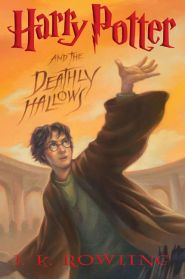 I predicted that Harry, Ron, and Hermione would all live to the end of the series, though J.K. would keep us in suspense until the last minute. Bing! I predicted that Snape would reveal that he had killed Dumbledore and turned Death Eater on Dumbledore’s orders. Bing! I predicted that Harry would triumph over Voldemort at the expense of lots of secondary characters. Bing! I predicted that Harry would find some way to contact Sirius Black again from beyond the grave. Well, no bing! there, but I’d suggest that I deserve a partial bing! since Harry does manage to contact another dead mentor (Dumbledore) from beyond the grave.
 Sador is speaking here about the race of Men, and his statement may sum up Tolkien’s recently published novel as good as any. Children of Húrin is a tale about fear and Man’s futile attempts to wrest honor and courage from the jaws of certain doom. It’s a major new work, though incomplete, and one of the clearest distillations of Tolkien’s thought since the publication of The Silmarillion in the late ’70s.
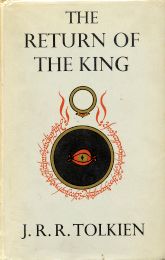 So there were all kinds of gems awaiting me on my re-reading of ROTK. I had completely forgotten about Beregond, Guard of the Citadel, and the heroic role he plays in saving Faramir from death at the hands of Denethor. I had only a faint recollection of Ghân-buri-Ghân and the Wild Men. I didn’t recall that our heroes have a run-in with Saruman before the Hobbits return to the Shire. I had forgotten that the only reason Merry was able to wound the Lord of the Nazgûl was because of his sword, picked up at the Barrow-downs in the early chapters of Fellowship.
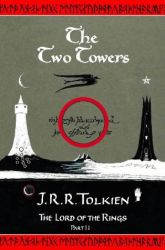 It’s a difficult book. Frodo and Sam, the characters we’re most invested in, disappear for a couple hundred pages; Gandalf is presumably dead in the book’s opening chapters; Boromir’s definitely dead; and Aragorn is still something of a distant figure. Gimli is interesting enough but hardly crucial to the plot, and it’s difficult to give two figs about Legolas.
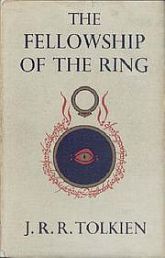 But more importantly, in an ideal world one would be able to discuss The Fellowship of the Ring without being overshadowed by Peter Jackson’s film of the same name. Unfortunately, for me that’s impossible. I’ve seen the films probably a dozen times each since their release, enough that I can recite most of the dialogue word for word. The Extended Edition of Fellowship is one of my favorite films ever, ever, ever.
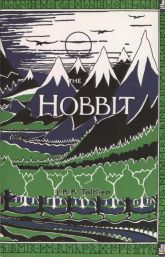 If you’re going to read the complete works of Tolkien properly, you definitely should not follow The Silmarillion with The Hobbit. (